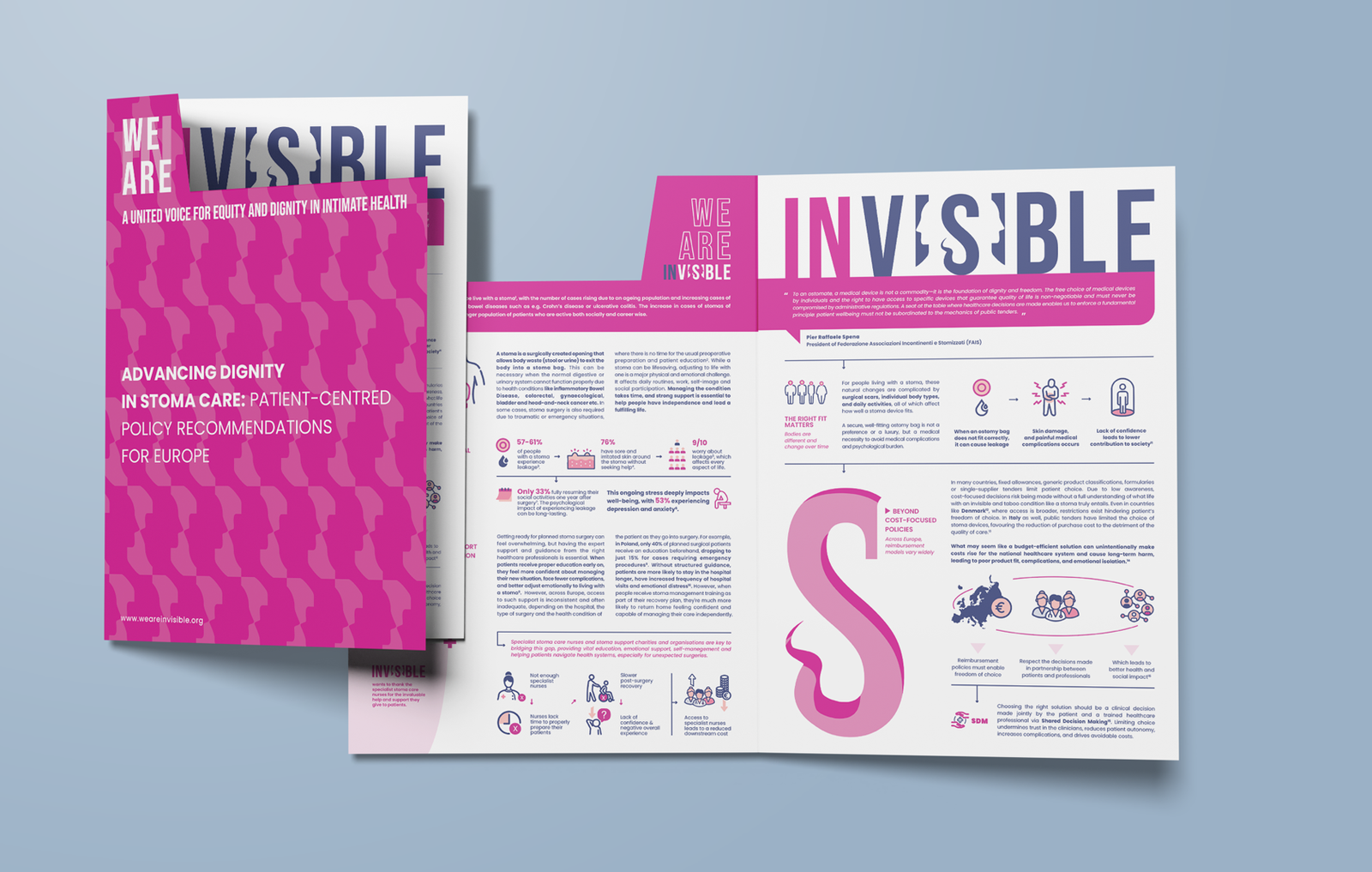

To an ostomate, a medical device is not a commodity—it is the foundation of dignity and freedom. The free choice of medical devices by individuals and the right to have access to specific devices that guarantee quality of life is non-negotiable and must never be compromised by administrative regulations. A seat at the table where healthcare decisions are made enables us to enforce a fundamental principle: patient wellbeing must not be subordinated to the mechanics of public tenders. For that, Invisible provides us a platform to share experiences between organisations beyond national borders and gain knowledge of best practices.

Collaborating with more than 14 European patient associations and organisations working together on stoma care and invisible intimate health challenges has clearly demonstrated the value of involving patient organisations in policymaking. It has reinforced my belief that these collaborations are essential to ensure that legislation and healthcare strategies are grounded in real-life needs, not only clinical or economic considerations. Patient organisations bring lived experience, continuity and practical insight that strengthen the design, implementation and evaluation of EU health policies. This ultimately leads to more inclusive, effective and sustainable policies across Europe.
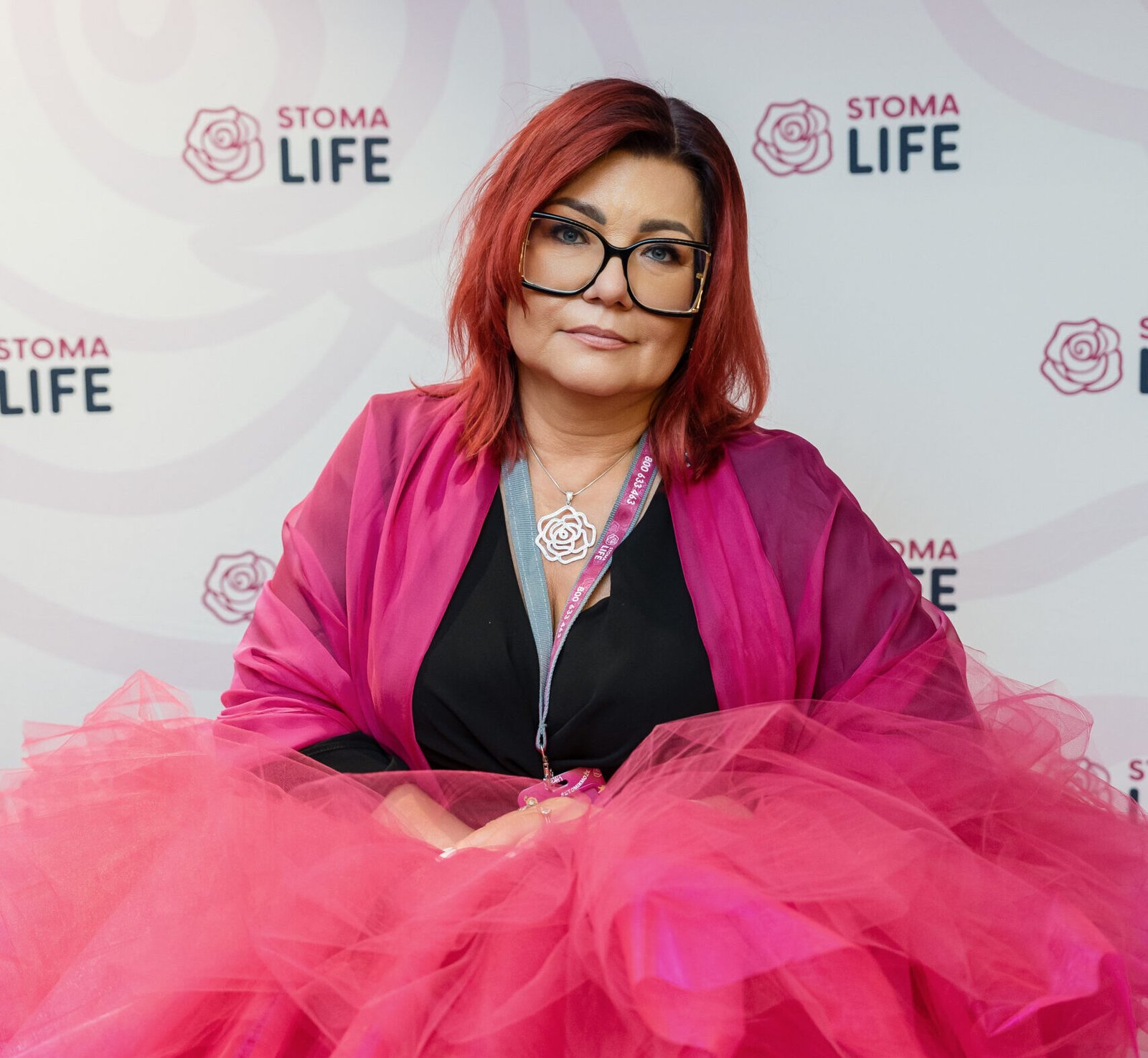
From the perspective of a patient organization, Invisible plays a vital role in making stoma care needs visible, understood and respected. The platform empowers patients by giving them a voice and by challenging stereotypes that still affect everyday life and access to care. Such advocacy is essential for improving awareness, shaping better services and supporting people with invisible care needs to live full, dignified lives.
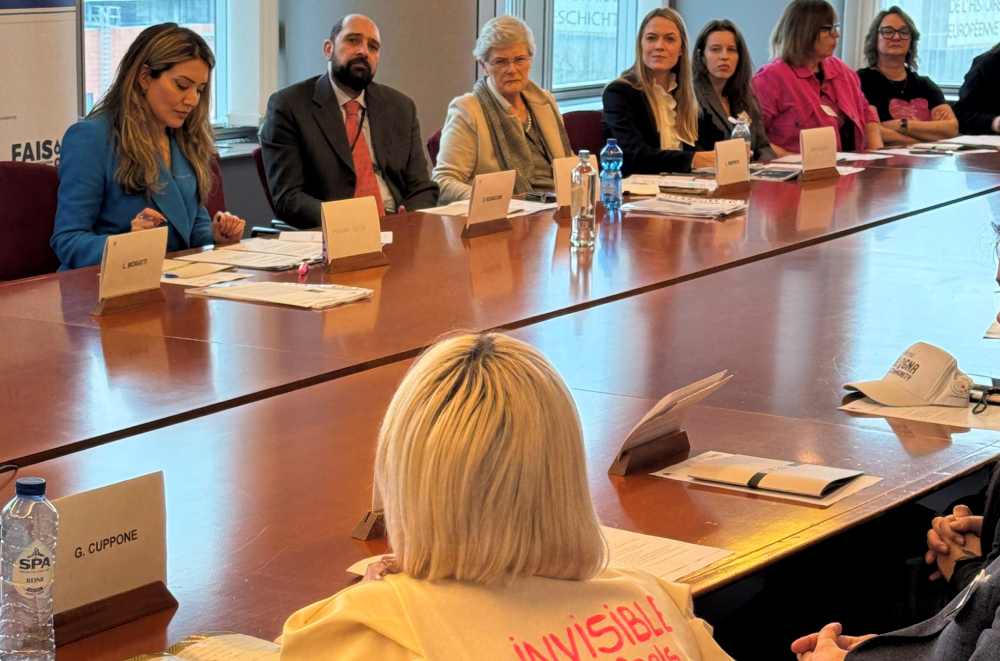
A roundtable discussion at the European Parliament bringing patient advocacy groups and policymakers together to exchange perspectives on challenges related to ostomy care across Europe.

Europe‑wide, patient‑led awareness campaign focused on everyday life with a stoma and the need for dignity and inclusion.

Invisible organised a workshop for NGOs on how to improve their advocacy efforts. Participants received strategic insight from former MEP & Latvian Prime Minister Krišjānis Kariņš, and a presentation from Mary Lynne Van Poelgeest-Pomfret of the World Federation of Incontinence and Pelvic Problems.
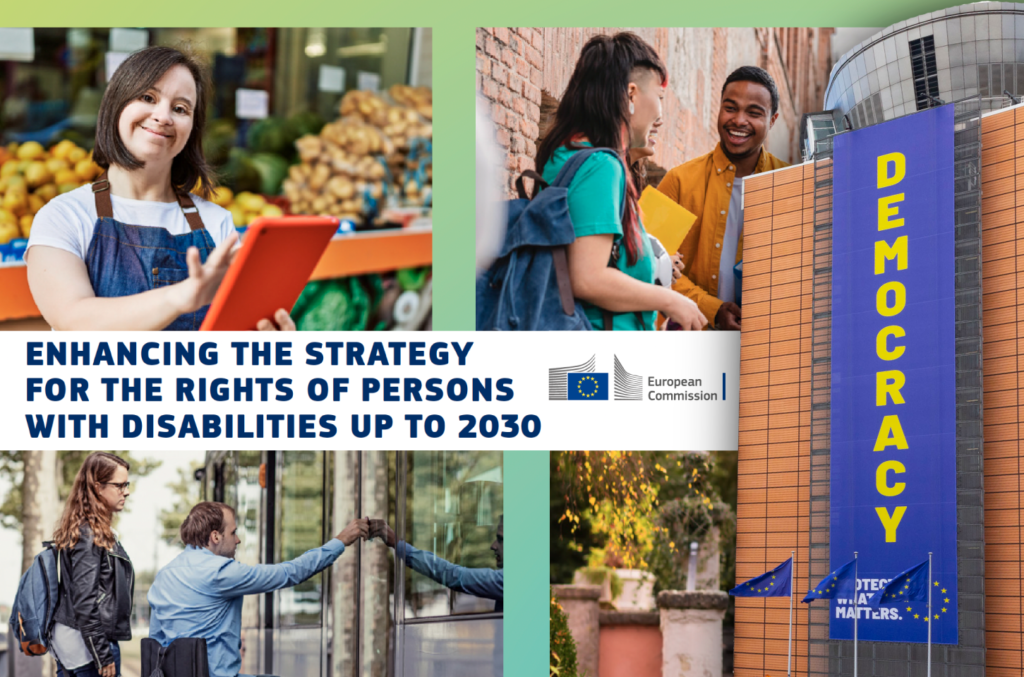
Invisible contributed patient insights to the European Commission’s public consultation on strengthening the EU Disability Rights Strategy towards 2030.
Invisible met with representatives from the European Commission's Director-Generals for Public Health (DG SANTE) and Justice (DG JUST). Discussions focused on the link between intimate health care needs and the revision of the EU's Disability Strategy, which was finally published on 6 May.